Tourist attractions in Venezuela: destinations by region
Venezuela's top tourist attractions by region: tepuis, the Andes, cays, islands and cities, with sourced facts, how to get there and when to go.

Venezuela's main tourist attractions
Venezuela's best-known places are Angel Falls and Roraima in Bolívar, the Andes of Mérida, the cays of Los Roques and Morrocoy, and Margarita Island. There's no official ranking, so we've grouped them by region using three criteria you can check for yourself: official recognition (national park or World Heritage Site), access, and sourced facts.
The country's coastline runs about 2,800 km and has more than 300 islands, according to Wikipedia as cited on the Beaches of Venezuela destination page. That's why the sea carries so much weight on this list. All sources were consulted in November 2026.
| Place | Region | Sourced fact |
|---|---|---|
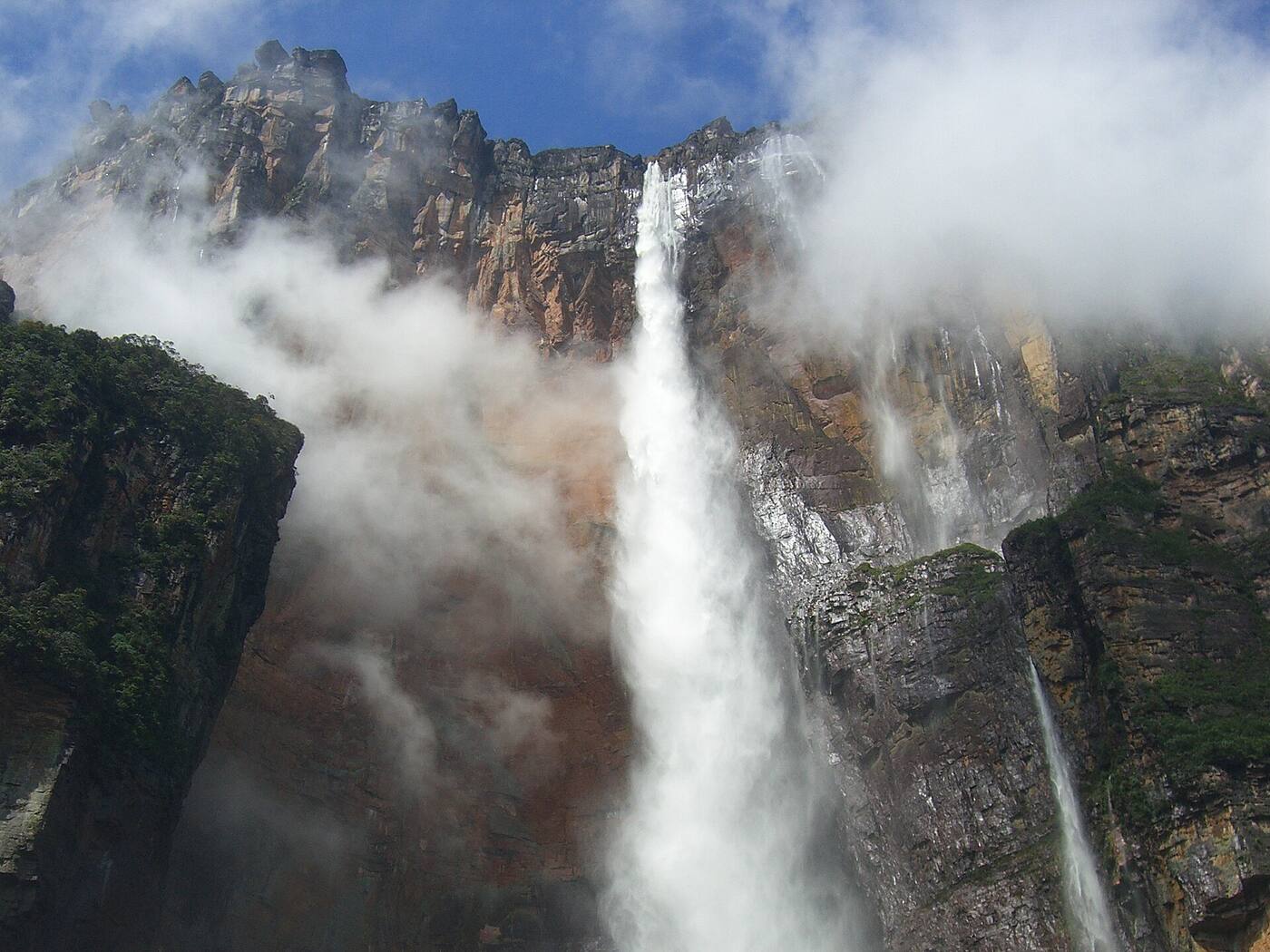
| Angel Falls | Bolívar | 979 m total height and 807 m of free fall |
| Mount Roraima | Bolívar | Sandstone table mountain, 2,810 m high |
| Pico Bolívar and Mérida | Andes | 4,978 m, the country's highest point |
| Los Roques | Caribbean | 42 cays, 176 km from Caracas |
| Morrocoy | Falcón | National park since May 26, 1974 |
| Mochima | Eastern coast | National park since December 19, 1973 |
| Choroní and Henri Pittier | Aragua | Playa Grande, almost 1 km long |
| Margarita | Nueva Esparta | About 1,020 km², the most populous island |
| Coro | Falcón | World Heritage Site since 1993 |
| Caracas | Capital | Ciudad Universitaria, World Heritage Site since 2000 |
Gran Sabana, Canaima and Roraima
Canaima National Park, in Bolívar, is the country's great nature destination: it covers three million hectares, and about 65% of its area is tepuis, according to UNESCO, which inscribed it as a World Heritage Site in 1994. On Mapitt, start with the Canaima National Park and Gran Sabana pages.
Angel Falls plunges from Auyán Tepuy, 979 m in total with 807 m of free fall. Read the Angel Falls guide for access and the best season.
Mount Roraima is a 2,810 m sandstone table mountain in the Sierra de Pacaraima. You climb it with a guide and a permit from Inparques (the national parks agency), and the classic route takes six days; it's all in the Roraima guide. Find more places in the area on the Gran Sabana and Canaima destination page and, for waterfalls, on Waterfalls in Venezuela.
The Andes and Mérida
Mérida is where Venezuela reaches its greatest heights: Pico Bolívar rises to 4,978 m, and the Mérida cable car climbs to Pico Espejo, at 4,765 m. The Mérida cable car doesn't go all the way to Pico Bolívar: from Pico Espejo the climb continues on foot, with a guide and mountaineering gear.
The Mérida guide covers villages of the páramo (high Andean moorland), lagoons and dated prices. The Mérida destination page brings together the state's listings.
Los Roques and Morrocoy
Los Roques is an archipelago of 42 cays, 176 km north of Caracas, and has been a national park since August 8, 1972. There's no ferry: you get there by plane. Its page is Los Roques Archipelago, and the practical plan is in the backpacker guide. The destination page is Los Roques.
Morrocoy National Park, in Falcón, was declared a national park on May 26, 1974, and has cays and white-sand beaches. You visit by boat from Tucacas or Chichiriviche; the Morrocoy guide covers fees and registration, and the destination page is Morrocoy.
Mochima, Choroní and other beaches
Mochima and Choroní are the beach options you can reach by road. Mochima National Park was declared on December 19, 1973, and Playa Colorada and Arapito have road access. Read the Mochima guide and see the Mochima destination page.
In Henri Pittier National Park, Bahía de Cata, Cuyagua and Playa Grande are among the most visited beaches. The Choroní guide suggests a weekend plan, and the destination page is Choroní and Henri Pittier. To compare beaches, open the best beaches in Venezuela.
Margarita and the islands
Margarita is the country's largest and most populous island, at about 1,020 km² with 489,917 inhabitants in 2022, according to Wikipedia. Its most popular beach is Playa El Agua, and El Yaque is known for windsurfing and kitesurfing. The destination page is Margarita.
For Coche, Cubagua, La Tortuga and others, see islands of Venezuela.
Coro and the Médanos
The city of Coro and its port have been on the World Heritage List since 1993. UNESCO highlights its earthen buildings and the blend of local traditions with Mudéjar and Dutch techniques.
Right next to it is Médanos de Coro National Park, a landscape of sand dunes near the road to the Paraguaná Peninsula. You'll find more pages on the Coro and the Médanos destination page.
Caracas, El Ávila and the mountain villages
Caracas offers history, architecture and mountains in a single visit. Its Ciudad Universitaria (University City) has been a UNESCO World Heritage Site since 2000, and El Ávila National Park forms the city's northern edge. For ideas, see the guide to things to do in Caracas.
Near the capital are Colonia Tovar and Galipán; read the Colonia Tovar guide and the Galipán guide, or the day trips from Caracas. For the coast of La Guaira, see the La Guaira coast destination page.
How to get to these places
The usual gateway is Maiquetía airport, in La Guaira, and from there domestic flights go to several regions. Spain's Foreign Ministry says the earthquakes of June 24, 2026, caused major damage in La Guaira, so check the state of the airport and the road before you set out.
Entry requirements, airlines and transfers are covered in the guide to traveling to Venezuela from abroad. Each destination has its own way in: a flight to Los Roques, a boat in Morrocoy and Mochima, the road to Mérida and Choroní.
When to go
Each region has its own season, and there's no ideal month for the whole country. In Caracas, the dry season runs from December to April, according to Wikivoyage (accessed November 10, 2026). On Margarita, what little rain there is falls mostly from mid-November to February, according to Wikipedia.
To compare regions, read the guide to the best time to travel to Venezuela.
Frequently asked questions
What are the most important tourist attractions in Venezuela?
Angel Falls, Roraima, Mérida, Los Roques, Morrocoy and Margarita are the ones that come up most in the sources we reviewed. There's no official list.
What tourist activities are there in Venezuela?
Multi-day hikes like the Roraima trek, cable car rides in Mérida and Caracas, beaches and cays by boat, windsurfing and kitesurfing on Margarita and Coche, and tours of historic centers like Coro's.
What's the largest national park to visit?
Canaima National Park, at three million hectares, according to UNESCO.
Which places in Venezuela are World Heritage Sites?
According to the sources in this guide: Canaima National Park (1994), Coro and its port (1993) and the Ciudad Universitaria de Caracas (2000).
Is it safe to travel to these destinations?
It depends on the area. Spain's Foreign Ministry, in travel advice in force as of November 10, 2026, recommends avoiding the states of Zulia, Táchira, Apure and Amazonas and not traveling by road at night. Also check your own country's travel advisory.
Places in this guide
Sources
- Mapitt: complete Angel Falls guide, editorial review, November 2026
- Mapitt: Roraima trekking guide, editorial review, November 2026
- Mapitt: guide to Mérida and the Venezuelan Andes, editorial review, November 2026
- Mapitt: Los Roques guide for backpackers, editorial review, November 2026
- UNESCO: Canaima National Park, cited on Mapitt's Gran Sabana and Canaima destination page, November 2026
- UNESCO: Coro and its Port, cited on Mapitt's Coro and the Médanos destination page, November 2026
- Wikipedia (Spanish): Isla de Margarita, accessed November 10, 2026
- Wikipedia (Spanish): Ciudad Universitaria de Caracas, accessed November 10, 2026
- Wikivoyage: Caracas, accessed November 10, 2026
- Spain's Ministry of Foreign Affairs: travel advice for Venezuela, in force as of November 10, 2026, updated September 17, 2026