7 Venezuelan dishes you have to try before you leave
Arepa, pabellón, cachapa and four more dishes, with what public sources say and where to order them.
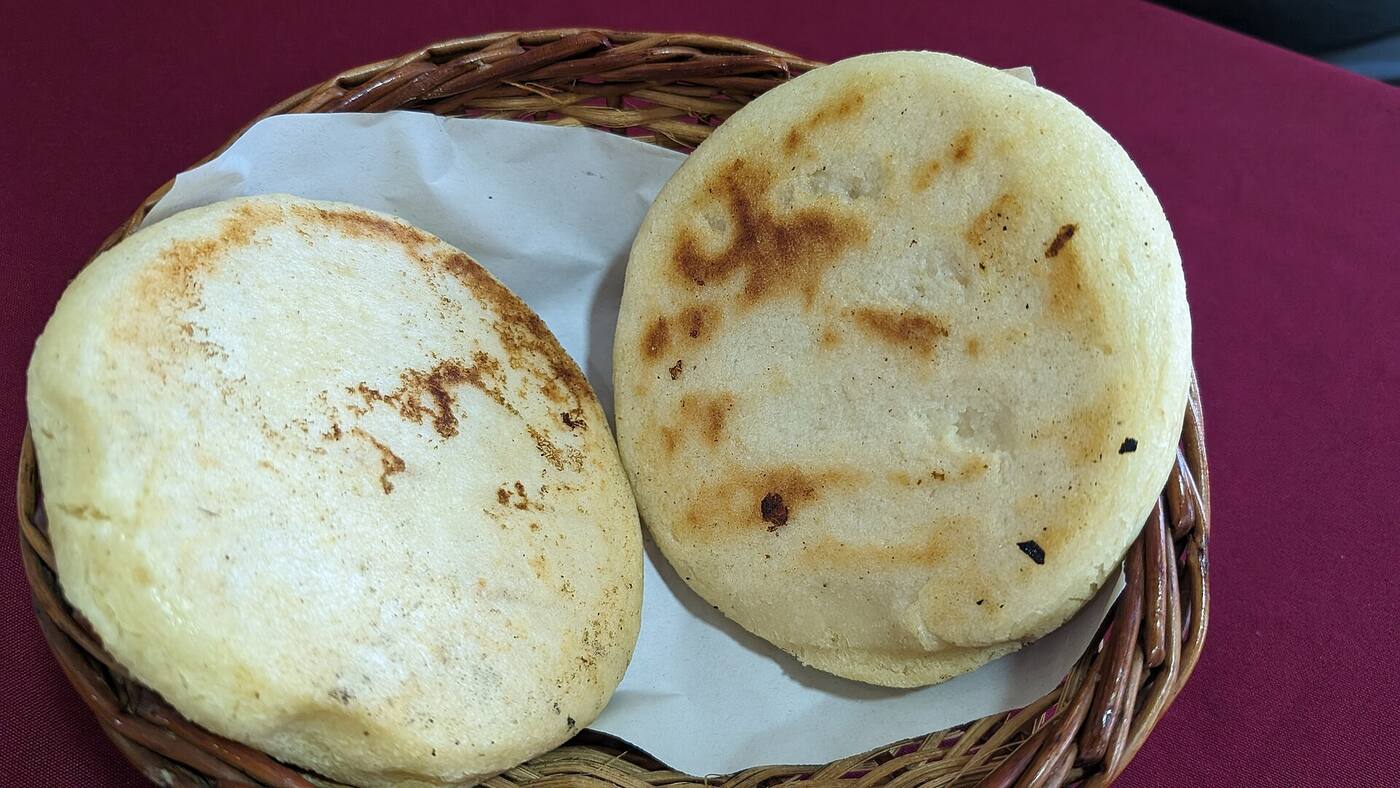
Seven dishes to start with
This guide covers seven Venezuelan dishes and tells you where to look for them, using only what a public source backs up. We don't give prices, because there's no dated public price for any of these dishes: ask at the place where you're going to eat.
| Dish | Base | Good to know |
|---|---|---|
| Arepa | Ground corn dough | Cooked on a budare (griddle) and filled |
| Pabellón criollo | Rice, shredded beef, black beans and fried plantain | Venezuela's national dish |
| Cachapa | Fresh corn | Sold at roadside stands |
| Hervido (sancocho) | Soup of meat, root vegetables and other vegetables | In Venezuela, hervido means sancocho |
| Fish with tostones | Fried fish and fried green plantain | Typical on the coast |
| Mondongo | Beef tripe with root vegetables and other vegetables | Thick soup; there are seafood and goat versions |
| Quesillo | Eggs, milk and condensed milk | A dessert with Canary Islands roots |
1. Arepa
The arepa is a round, flattened patty of ground corn dough, cooked on a budare (a flat griddle), baked or fried, so it ends up with a crisp crust and a soft inside. People eat it at any time of day, plain, with butter or cheese, or stuffed with shredded beef, chicken, eggs, avocado, black beans or chorizo. Its name comes from erepa, the word the Cumanagoto people used for corn.
2. Pabellón criollo
It's considered Venezuela's national dish. It comes with white rice, shredded beef, black beans and slices of fried ripe plantain. If you order it "a caballo" (on horseback), it comes with a fried egg on top, and "con baranda" (with a railing) means the plantain slices go around the edge of the plate. In 2019 it was recognized as part of Venezuela's Intangible Heritage.
3. Cachapa
The cachapa is a fresh-corn dish cooked on a budare. You'll find it at roadside stands as well as in sit-down restaurants. It usually comes with queso de mano (a soft, fresh stretched-curd cheese), ham, queso guayanés, butter, shredded beef, chicharrón or fried pork. It was also recognized as part of Venezuela's Intangible Heritage in 2019. Its name comes from kachapa, a sweet arepa of the Chaima people recorded in a dictionary held in the Archivo de Indias.
4. Hervido (sancocho)
In Venezuela and Colombia, the word hervido is used for sancocho, a soup of meats, root vegetables, other vegetables and seasonings. The type of meat gives it its name: there's hen sancocho, fish sancocho and mixes of several meats. The sources we used don't tie it to a particular region: ask for it at the restaurant.
5. Fried fish with tostones
Along Venezuela's coasts, tostones (green plantain, fried and flattened) are served as a side with fish, in restaurants and food stands near the beaches. Fishing is part of local life in Choroní, and in Los Roques most residents are of Margarita origin and made their living from fishing. If you're heading to either place, ask for the catch of the day.
6. Mondongo
In Venezuela, mondongo is a thick, slightly sweet and very hearty soup whose main ingredient is beef tripe, cut into small squares and cooked for a long time until tender. It includes potatoes, chickpeas, yam, ocumo (malanga), cassava or carrot, and in the east ripe plantain is often added. There are variations: mondongo marino, with seafood, and goat mondongo, typical of Lara and Falcón.
7. Quesillo
In Venezuela, quesillo is a dessert made with eggs, whole milk and condensed milk, with roots in the Canary Islands, where it's called flan de huevo. It's made in a quesillera, a metal mold shaped like a sewing box. Don't confuse it with the cheese that goes by the same name in other countries.
How to make the most of them
- Ask at each place which dish they recommend that day and whether the price includes a drink.
- If you're heading to the coast, pair this guide with our guide to Choroní or Los Roques.
See the Los Roques guide: how to get there and what to see to plan your trip to the area.
Places in this guide
Sources
- Wikipedia (Spanish): Arepa, accessed November 6, 2026
- Wikipedia (Spanish): Pabellón criollo, accessed November 6, 2026
- Wikipedia (Spanish): Cachapa, accessed November 6, 2026
- Wikipedia (Spanish): Sancocho, accessed November 6, 2026
- Wikipedia (Spanish): Tripas (mondongo), accessed November 6, 2026
- Wikipedia (Spanish): Quesillo, accessed November 6, 2026